

RFID Brings Transparency to CNC Tool Logistics
CERATIZIT is digitizing its CNC tool management with TURCK’s RFID solution—read ranges of up to 20 millimeters and seamless integration with WinTool increase efficiency and process reliability
CERATIZIT, a manufacturer of cutting and milling tools, manages over 700 tool variants, up to 8,000 individual tools, and constantly changing geometry data in its CNC production. The company addresses this challenge with an RFID solution from TURCK: A custom-developed Windows DLL seamlessly integrates the TBEN-S-RFID interface with the WinTool software. In this way, the system identifies the variants and tools and automatically transfers their geometric data to the machine control system. In addition to the WinTool integration, the decisive factors were, above all, the read range of 15 to 20 mm and the system’s reliable operation even in metallic environments.
-turck-image.jpg)
With a read/write distance of up to 20 mm, the TURCK RFID system offers one of the longest ranges
-turck-image.jpg)
The in-metal RFID tag is securely integrated into the tool holder and enables reliable identification
-turck-image.jpg)
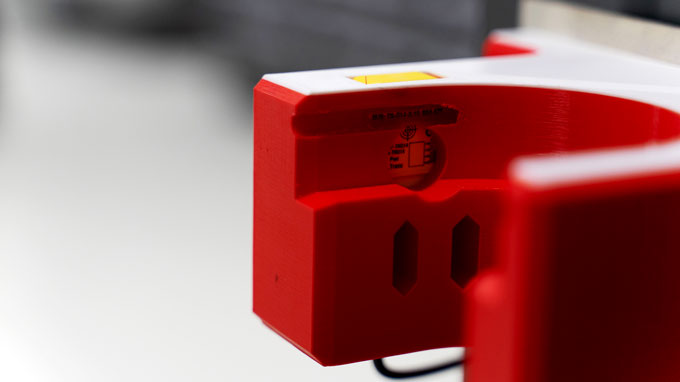
he tools are identified by the red bracket and assigned to their respective slots in the tool magazine
-turck-image.jpg)
Each tool has its own individual dimensions, which the machining center must know
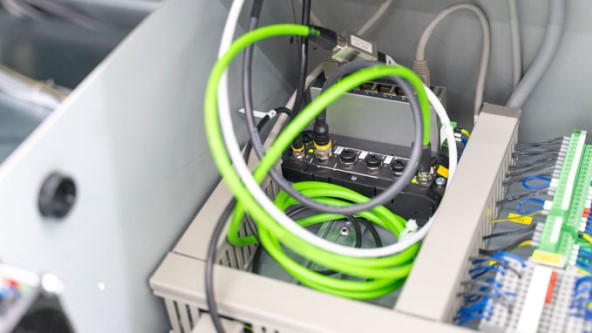
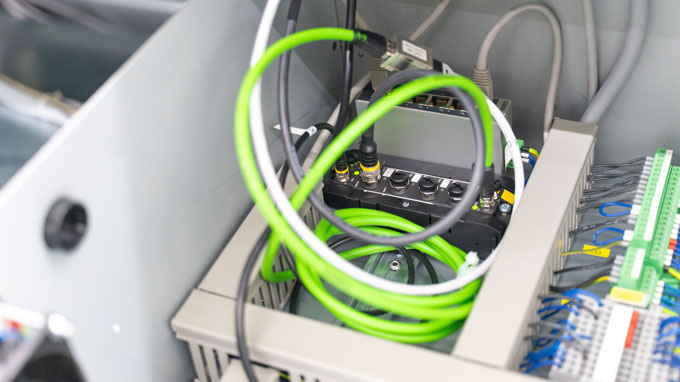
The TBEN-S-RFID transmits all data to the tool management system via a specially developed Windows DLL
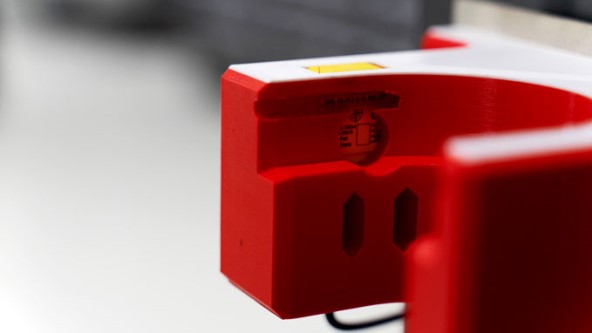
CERATIZIT produced the special mounting bracket for tool identification using 3D printing
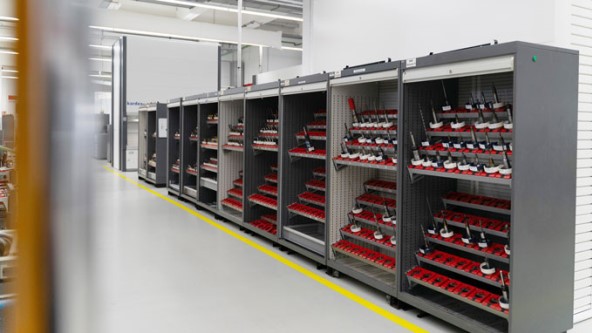
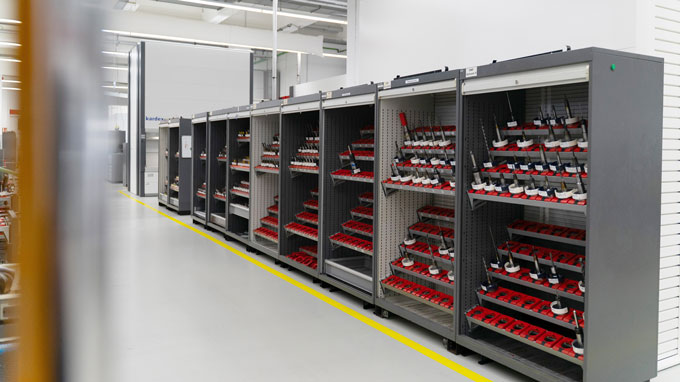
These cabinets hold a fraction of the thousands of tools stored there for quick access
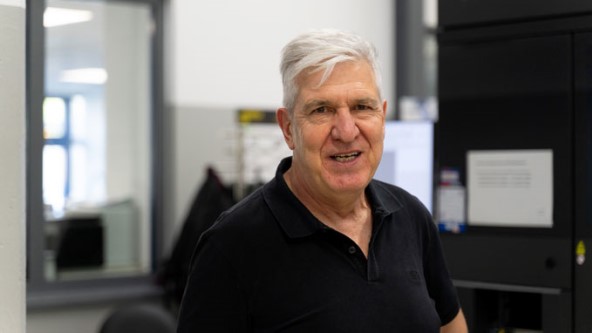
''It was the increased reading distance that made this project possible in the first place.''
-turck-thumbnail.jpg)
-turck-thumbnail.jpg)
-turck-thumbnail.jpg)
-turck-thumbnail.jpg)



.jpg)
.jpg)
.jpg)
.jpg)

CERATIZIT manufactures tools for high-precision machining processes, including fine-boring tools with micrometer-level precision, modular drilling tool assemblies with up to ten individual components, and electronic U-axes for complex profile machining and demanding contours.
Over 700 three-component molds, several thousand individual parts
To manufacture its cutting tools, CERATIZIT uses its own CNC and machining tools on its in-house machine tools. In CERATIZIT’s in-house production, the number of tool variants in use rose to over 700.
A typical tool consists of three main components: the hollow taper shank for clamping into the machine, the shrink fit shank for connecting the tool tip, and the tip itself, which is usually a precision-ground cutting tool. Many of these tools are identical in design but differ in their geometric data, particularly in length. These differences are technically unavoidable but highly relevant to production, as CNC machines rely precisely on this data. The goal was therefore to make tool management more transparent and to digitize it end-to-end in order to reliably track stock and tool life.
Background: Complex manufacturing, increasing demands
In practice, this results in considerable complexity: Thousands of components—such as tool holders, cutting tools, taper adapters, and coolant carriers—must be managed. At the same time, there are numerous preconfigured complete tools that, despite having the same design, differ in length due to shrinkage and wear. Each tool requires a unique identifier to ensure that machines can be operated reliably. Existing methods were increasingly reaching their limits. Engraved markings were barely machine-readable, adhesive tags came loose under production conditions, and optical codes were sensitive to contamination.
The TURCK RFID system's long read range as a decisive factor
After comparing various approaches—ranging from the use of its own transponders to solutions from different vendors—CERATIZIT opted for TURCK’s RFID system. In addition to its integration with WinTool, the decisive factor was, in particular, the long read range of 15 to 20 millimeters, which is achieved reliably even in metallic environments.
To ensure that the RFID system works seamlessly with the WinTool tool management system, the interface of TURCK’s TBEN-S RFID interfaces was expanded. The Application Support Team provided a corresponding Windows DLL that establishes the connection between the RFID interface and the Windows PC.
End-to-End Digital Tool Lifecycle in Production
In practice, the digital tool lifecycle begins as early as the assembly stage. Individual components—such as the holder, shrink adapter, and cutting tool—are combined to form individual, complete tools, with each component identified by a barcode either before or after it is used in a tool. After assembly, each tool is stored as a unique item in automated warehouse systems. As soon as the components are assembled into a tool, they are uniquely identified via RFID.
Before being inserted into the machining center’s magazine, the tool is re-identified via a bracket on the machine, which uniquely assigns the tool to a magazine slot. Further identification then takes place within the machine’s logic without RFID. The transfer of exact length data, as well as feedback on usage, return to stock, and service life, is fully integrated via WinTool.
Conclusion: End-to-End Digitization Thanks to RFID, Software Integration, and Application Support
With TURCK’s RFID system, CERATIZIT has implemented a fully digital tool management system that tracks each tool individually. The key lies in the interplay between RFID technology, software integration, and application support. The Windows interface provided by TURCK connects the RFID interface directly to WinTool and ensures a secure, automated data flow. Working closely with CERATIZIT and the integration partner, a practical, scalable, and economic solution was developed.
- Automotive
- Modular Flexibility and Safety in Filter Production
- Cable with Integrated Current Monitoring Prevents Unwanted Shutdown of Conveying System
- Inductive Couplers Ensure Precise Material Feed
- Assembly Management with a Direct MES Connection
- Body Detection in Automobile Production
- Reliable Skid Detection in Automotive Production
- Error-free JIS Order Picking for Bumpers
- RFID Bus Mode Ensures Quality of Lithium-Ion Batteries
- Level Control in Central Lubrication System
- Quality Assurance on the Gluing Robot
- Tilt angle sensor accelerates platform alignment
- Motor Control with Condition Monitoring
- IP67 Hybrid Module Processes Safety Signals
- Decentralized monitoring of cooling stations
- Robot welding cells networked with Ethernet
- Monitoring the cooling circuit on welding clamps
- Flow monitoring in drum washers
- Condition Monitoring of Motors
- Press Shop – Tool Identification
- Body Shop – Welding Nut Detection
- Paint Shop – Skid Identification
- Final Assembly – Robot Assembly
- Powertrain – Contactless Verification
- Item-level Detection with UHF RFID
- Supply of cooling lubricant in machine tools
- Press Shop: Controlling hydraulic pressure
- Measuring process pressure on scissor lifts
- Success Stories
- RFID Solution for Data Acquisition in Stator Production
- Modular Plant for Flexible and Efficient Production
- Decentralized Safety Technology for Modular Production
- Modular Conveyor System
- RFID and I/O Modules for Safe Tool Changes
- RFID Guides AGV in Suspension Production
- IO-Link Wired Silencer Production
- Workpiece Carrier Identification in Rear Vent Production
- Weld Nut Sensing
- RFID Traceability
- RFID in Engine Production
- Bumper Production with Identification
- Solutions for Paint Shops
- Welding and Assembly Sensors
- Angle Sensors for Assembly Systems
- Tool Identification
- RFID Identification of Injector Nozzles
- RFID in the Body Shop
- IO-Link Eases Differential Gear Production
- Chemical
- excom I/O System Enables Safe Hydrogen Liquefaction
- Decentralized Automation in Ex Areas
- RFID Control of Tube Connections in the Ex Area
- Ethernet Signal Connection in the I&C Room
- Ethernet-based Automation of Modular Skids
- Ex Isolation in Modular Process Plants
- Detection of Pigs
- Remote Signal I/O
- Easy Connection of Field Devices
- Signal Processing with System I/O in the Control Cabinet
- Signal Separation with Interface Technology in the Control Cabinet
- Identification of Hose Connections
- Efficient Monitoring of Cabinets in the Field
- Monitoring of Quarter Turn Actuators
- Planning and Assembly of System Solutions
- Success Stories
- Control Cabinet Monitor for Transmission of Condition Data
- Efficient Cooling of Industrial Furnaces with Turck's FS+ Flow Sensors
- I/O System Excom Creates Space in the I&C Rooms
- Zone 2 and 22 RFID
- Efficient Testing Control
- Intrinsically Safe Field Communication
- Process Control System Partnership
- Hazardous Area Remote I/O
- Dual Valve Position Feedback
- Flexibility with Fieldbus
- Asset Management with Remote I/O
- Correct Positioning with RFID in Carbide Production
- Compact Ex Protection
- Energy
- Capacitive Sensor Detects Point Level in Pellet Heating System
- RFID System Identifies Solar Cell Carriers
- Decentralized I/O System for Hazardous Areas at H2 Refueling Stations
- Decentralized I/O Solution in Ex Zone for H2-Fueling Station
- I/O Module Facilitates Setup and Mobile Use of Fuel Cell Test Stand
- Wind Turbine Rotor Positioning
- IP67 I/O in Coal Production
- UHF RFID Identifies Switch Gear
- Remote I/O in Biogas Plant
- Food and Beverage
- Condition Monitoring Sensor Automates Climate Control
- Condition Monitoring of Control Cabinets
- Condition Monitoring in Storage Rooms
- Dough Thickness Control in Rolling Machines
- Identification of Food Containers
- Quick Sensor Replacement in Beverage Plants
- Detection of Pipe Elbows
- Identification of Chocolate Moulds
- Success Stories
- Cloud-based Maintenance for Steam Generators
- RFID Support Enables Track and Trace in Food Production
- Reliable Linear Position Detection in Ex Zone 22
- Decentralized Control Modules in Coldstore
- Track and Trace in Meat Production with RFID
- Contact-free Encoder in Potato Production
- UHF RFID in Food Distribution Center
- RFID for Chocolate production
- Distributed I/O for Food Equipment
- Remote I/O for Distilleries
- RFID and Autoclaves
- Transparency in Chocolate Manufacturing
- IP67 Power Supplies for Conveyors
- Identification in Food Product Storage
- Logistics
- UHF RFID Tunnel for Goods Identification on Conveyor Belts
- Preventing Package Jams in the Logistics Center
- Height Control and 3D Spatial Monitoring on Autonomous Forklift Trucks
- Decentralized Control of Conveyor Modules
- Tracking Big Bags with RFID
- Distance Detection in Container Cranes
- Access Control for Protected Areas
- I/O Blocks Control Roller Conveyor Modules
- Fast Tag Detection at Warehouse Gates
- Item-level Detection with UHF RFID
- Preventive Maintenance on Conveyor Belts
- Detection of Transport Containers
- Level Detection in Vessels
- Identification of Cryovessels
- Identification of Mobile Containers with Handheld Devices
- Identification of Food Containers
- Tier 1 – Bumper Identification
- Condition Monitoring in Storage Rooms
- Collision Protection on Reach Stackers
- Success Stories
- RFID Brings Transparency to CNC Tool Logistics
- Efficient Solution for the Digitalization of Conveyor Technology
- Logistics: RFID Reduces Error Quota by 99 Percent
- ROI After Three Avoided Delivery Errors
- Sustainable Tracking of RTIs thanks to RFID
- RFID with HF Bus Mode Eases Seed Storage
- RFID Enables Unmanned Store at Major Building Site
- I/O and Safety Modules Increase Throughput in Intralogistics
- Shipment Tracking for Raw Materials
- RFID-Based Tracking Solution for Loading Error Minimization
- RFID-based Tracking of Inbound and Outbound Materials
- Decentralized UHF RFID Solution
- Contact-free Encoder in Potato Production
- Decentralized Control Modules in Coldstore
- IP67 Power Supplies for Conveyors
- Modular Conveyor System
- RFID Solution for Warehouse
- RFID Guides AGV in Suspension Production
- RFID Identifies Pharmaceuticals
- UHF RFID in Food Distribution Center
- Mobile Equipment
- Animal and Object Detection on the Combine Harvester
- Condition Monitoring Sensor Automates Climate Control
- Automatic Slope Compensation
- Distribution Lines for Field Sprayers
- Angle Measurement on a Field Sprayer
- Determining the Boom Angle Position
- Two-Axis Tilt Measurement on a Combine Harvester
- Collision Protection on Reach Stackers
- Success Stories
- RFID Solution with Smart Forklifts in Autombile Production
- Safe Remote Maintenance of Irrigation and Drainage Pumps
- Access Control with RFID System
- Selective Asparagus Harvester
- Position Measurement with RFID and Encoder
- RFID Guides AGV in Suspension Production
- Block I/O Modules on Super Yacht
- Wear-free Encoder on Hopper Dredger
- I/O for Dust Suppression
- Cabinet Cooling
- Quick Disconnect Connectivity
- Automation Solutions for Extreme Cold
- Remote I/O for Cranes
- Rugged Heavy Metal Lifting
- Rollercoaster Positioning
- Mobile Machinery Solutions
- Exact Height Positioning
- Critical Angle Sensing
- Angle Sensor Detects Platform Lift
- Oil and Gas
- Packaging
- Decentralized RFID Package Verification
- Identification of Printing Color Cartridges
- Reliable Operation of Machines
- Monitoring of Caps in Filling Lines
- Monitoring Changeover Processes
- Identification of Test Bottles
- Level Monitoring of Ground Coffee
- Level Detection in Vessels
- Detection of Transport Containers
- Success Stories
- Pharma
- End-to-End Sample Tracking with RFID
- RFID Control of Tube Connections in the Ex Area
- Decentralized Package Verification
- Automate Modular Skids
- Pharmaceutical Skids with Decentralized I/O Technology
- Ex Isolation in Modular Process Plants
- Control of Valve Interfaces
- Monitoring of Quarter Turn Actuators
- Detection of Pipe Elbows
- Remote Signal I/O
- Planning and Construction of Super Skids
- Easy Connection of Field Devices
- Identification of Cryovessels
- Identification of Mobile Containers
- Identification of Mobile Containers with Handheld Devices
- Identification of Hose Connections for Precursors
- Identification of Hose Connections in Sterile Areas
- Identification of Hose Connections in Ex Zone 1
- Identification of Big Bags and Bioreactors
- Identification of Single-Use Applications
- Success Stories
- Checking Hose Connections with RFID
- Contacless Transfer of Power and Switching Signals
- HMI Controls Industrial Blender
- BL20 Codesys Gateway Controls Image Processing Machine
- RFID Identifies Pharmaceuticals
- Speed measurement of mixing heads in magnetic stirrers
- Reading Device Detects Different Materials
- Semiconductor
Select Country
Turck worldwide